Marmalade Setting Point Checklist: 6 Reliable Tests for Perfect Set
The setting point is the quiet moment when marmalade stops being sweetened orange juice and becomes something you can actually spread. Boil a couple of minutes short and you get syrup that seeps into the toast. Boil a couple of minutes long and you get a dark, chewy block that fights the knife. The awkward part is that no single test tells the whole truth: a thermometer drifts, a saucer that has not chilled long enough will lie to you, and the bubbles look impressive whether or not the pectin has finished its work. Use two or three of the checks below together and the answer stops being a guess.
Before You Test: Set the Odds in Your Favour
Setting point is a target, and a few kitchen conditions move the target around. Sort these out before the pan goes on the heat and every test afterwards will read more honestly.
- Chill the plates early. Three saucers or small plates in the freezer for at least ten minutes. A lukewarm plate will never wrinkle anything.
- Clip the thermometer before the boil. The bulb should sit in the syrup, not on the base of the pan, and never in a pocket of thick peel against the side.
- Start checking at the early end of the recipe's range. Most marmalades hit setting point somewhere between 20 and 40 minutes, and Seville orange and lemon-heavy batches can get there sooner because of their pectin.
- Work with a wide pan. A shallow surface evaporates faster and gives you a steadier rise in temperature than a deep, narrow stockpot.
- Have your jars hot and ready. Warm, clean jars and a proper seal matter more than the last half-degree.
The Temperature Test
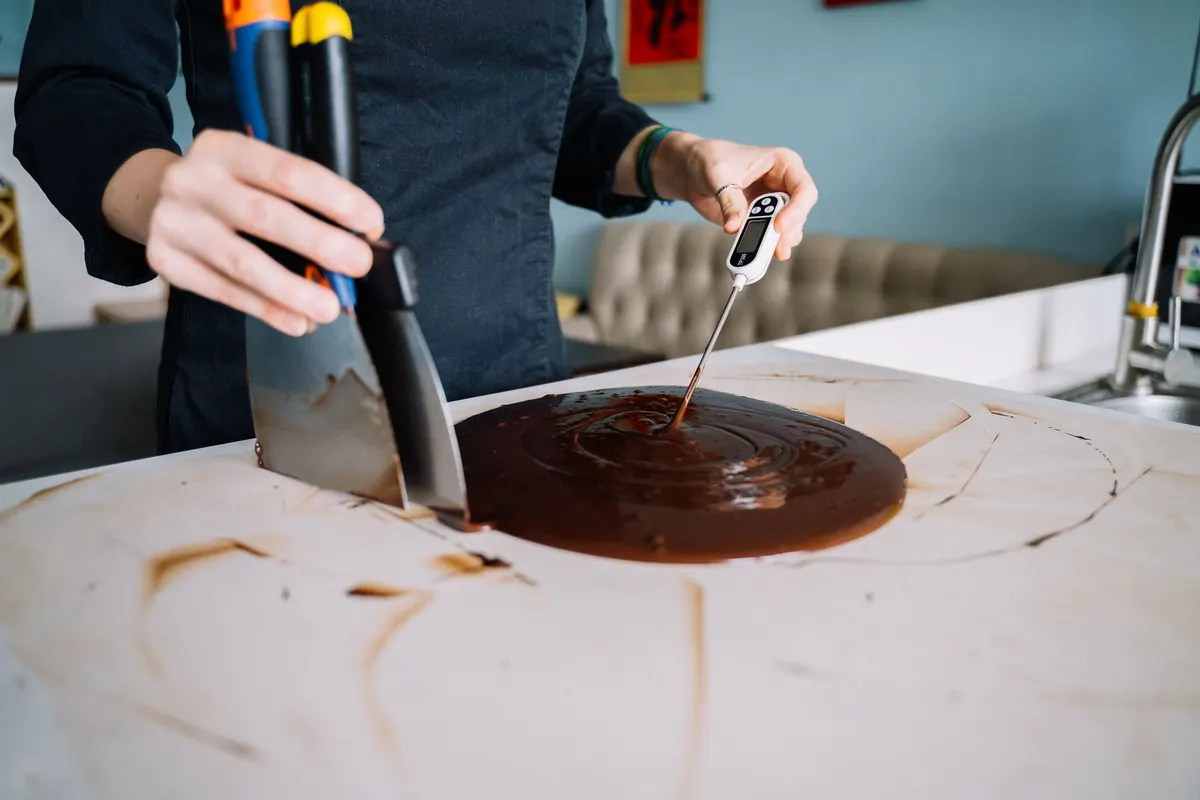
Take the pan off the heat, let the bubbles settle for a few seconds, and read the thermometer in the middle of the pan. At sea level, marmalade sets at 104–105°C (219–221°F). If you are reading 102°C, you are still making syrup, however thick it looks.
Calibrate the thermometer first
Dip it in boiling water. At sea level it should read 100°C (212°F). If it reads 98°C, add two degrees to everything you measure rather than blaming the fruit.
Cooking at altitude
Water boils cooler the higher you are, so setting point drops with it. A practical rule is to aim for the local boiling point of water plus 8–9°C. Water boils roughly 1°C lower for every 300 metres (1,000 feet) above sea level, so at 1,000 feet you are looking for about 103–104°C. Boil a pan of plain water, note the reading, and add nine.
The Chilled Plate and the Wrinkle
This is the test most experienced preserve makers trust, and it takes less than two minutes. Drop a teaspoon of syrup onto a frozen plate — no big shreds of peel in the sample — and return it to the freezer for 60 seconds. Now push the edge of the blob with your fingertip.
If it has formed a skin that wrinkles and slides when you tilt the plate, stop boiling. If it is still liquid and runs, keep going and test again in two or three minutes. If it has set firm and flat with no wrinkle, you have probably gone a little past the ideal point, though the marmalade will still be perfectly good.
A marmalade that is ready will often still look loose and wobbly in the pan. Trust the plate, not the wobble.
Two Spoon Tests Worth Knowing
The flake and sheet test
Lift a spoonful of marmalade, let it cool for a few seconds, then tip the spoon back over the pan. While it is under set, the syrup falls in separate drips that break apart. As it approaches setting point, those last two drops merge into a flake that hangs from the spoon, and eventually the final portion falls as a single sheet. Quick, but it reads a moment early, so treat it as a signal to check the plate rather than as a verdict.
The chilled spoon line
Keep a couple of metal spoons in the freezer. Press the back of one into the marmalade, wait about 30 seconds, then draw your finger through the coating. If the line stays clean and the marmalade does not flood back into the gap, you are at setting point. If it closes over immediately, boil on.
The Parting Trail: A Sixth Check
Off the heat, draw a wooden spoon slowly across the base of the pan. In a thin syrup the gap fills back instantly. As the marmalade nears setting point, the trail stays visible for a second or two before the mixture creeps back across the metal. It is a rough reading, but useful when you are stirring and want a fast answer without fetching the thermometer.
The Order to Run the Tests
- Chill three plates and two spoons before you start boiling.
- At around 20 minutes, take the pan off the heat.
- Read the thermometer in the centre of the pan.
- Run the parting trail while the pan is still warm and easy to stir.
- Do the spoon flake test with the same spoonful.
- Finish with the chilled plate and push for a wrinkle.
- If two of the three agree, jar it. If they disagree, boil for two more minutes and start again.
If It Is Under or Over Set
Under set: return the pan to a hard boil for three to five minutes, squeeze in a little lemon juice — the acid helps the pectin finish its job — and retest. If it is only slightly loose, jar it anyway and label it spoonable. Loose marmalade is excellent on porridge, yogurt and roast duck.
Over set: a rubbery set is genuinely hard to reverse. You can reheat the marmalade gently with a splash of boiling water, stirring until it loosens, then rejar it and keep those jars in the fridge, using them within a few weeks. Set jars also make a fine glaze for ham or a warm sauce for ice cream, so nothing is wasted. If you are new to preserving, stick to a tested recipe's sugar quantities rather than improvising — the sugar is what keeps the finished jars stable.
Pull the Pan Off the Heat
Test with the pan off the burner. Thirty seconds of residual heat can carry a batch from set to stiff while you are still hunting for a sa
Photo: Anna Tarazevich / Pexels