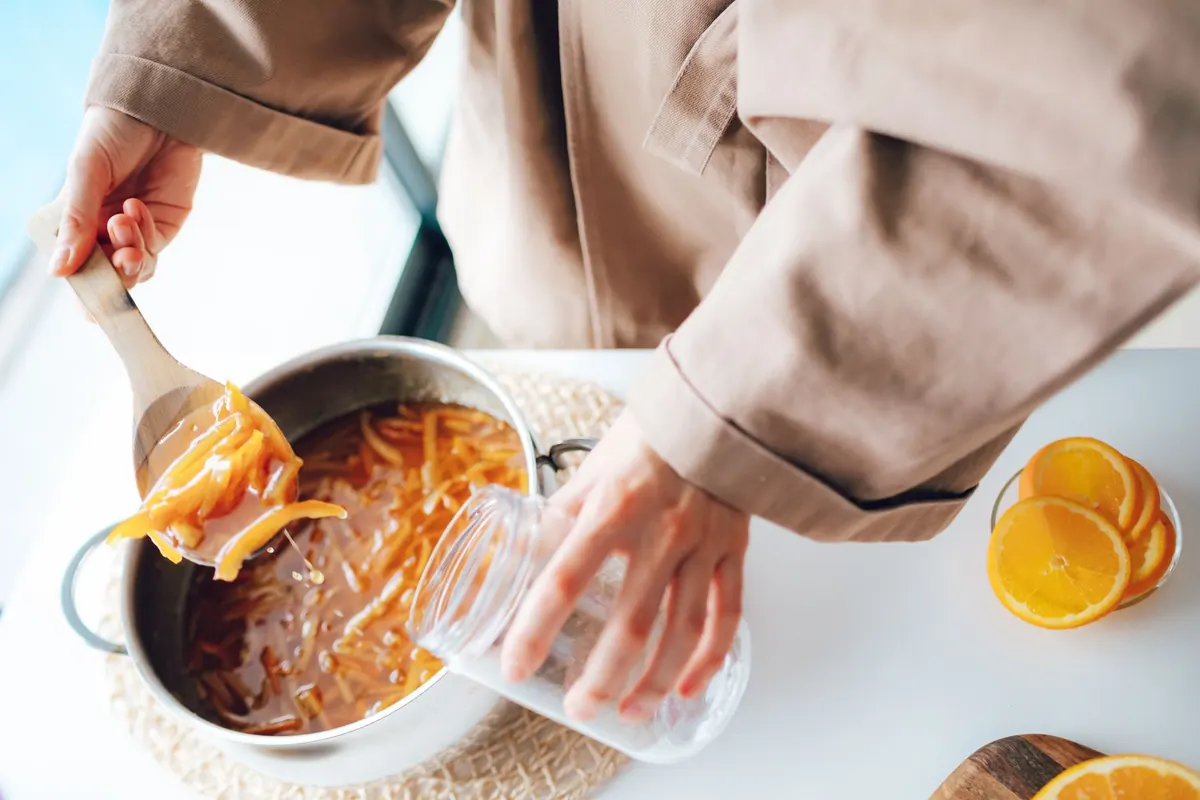
Chunky vs. Fine-Cut Marmalade: Texture, Cook Time, and Best Uses
Two jars, same fruit, same sugar, same afternoon in the kitchen. One glows with ribbons of peel; the other is a smooth amber gel with barely a fleck in it. Both are marmalade, and both are good — but they behave differently on the spoon, in the pan, and on the plate. Knowing which one you are making before you pick up the knife saves a lot of second-guessing later.
What Cut Actually Changes
Shred size is not a cosmetic decision. It controls three things at once: how quickly the peel softens, how much pectin and bitterness end up in the syrup, and how the finished preserve feels in the mouth.
A one-millimetre strip of Seville orange peel has far more exposed surface than a six-millimetre slab of the same peel. More surface means faster water absorption during the first simmer, quicker pectin release, and a faster climb to setting point once the sugar goes in. Change the cut and you have effectively changed the recipe, even when the ingredient list looks identical.
Texture and Mouthfeel
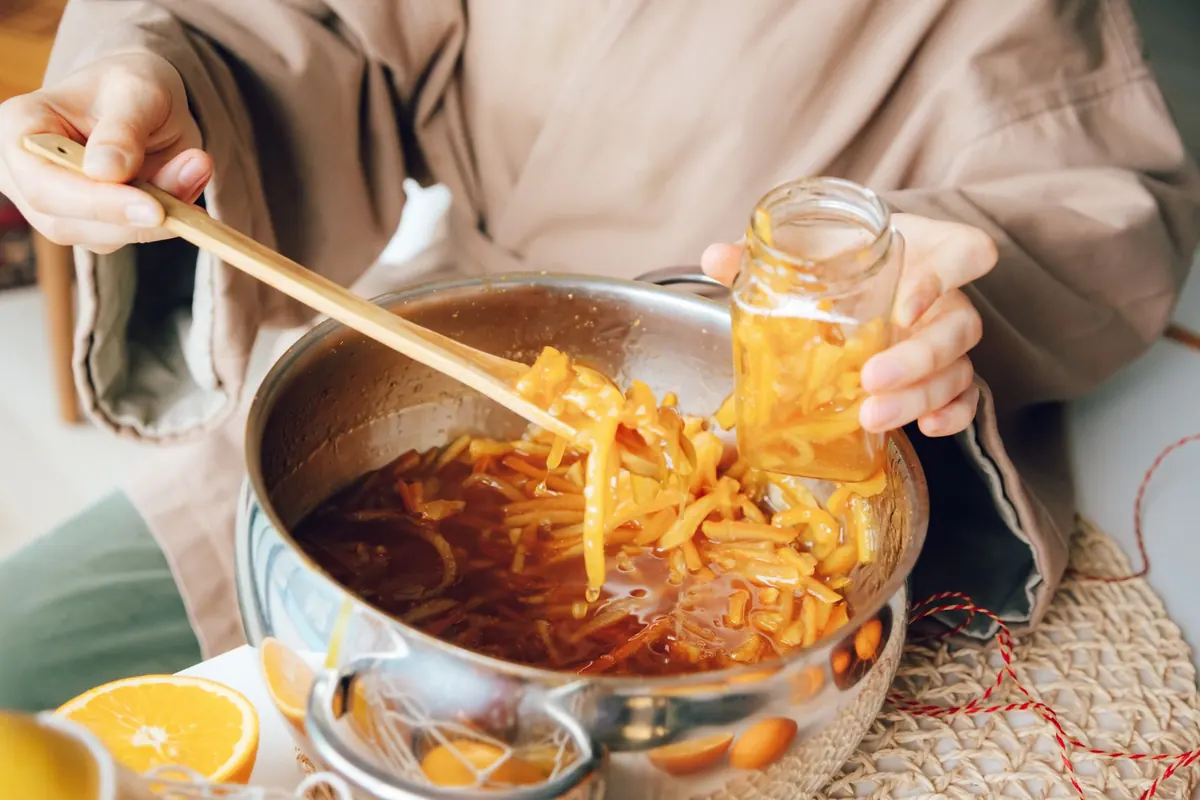
Chunky marmalade — roughly 5–10 mm pieces, or thick slices — gives you a spoonful you chew. The gel around the peel tends to be softer and looser, because less peel has broken down into it. On buttered sourdough the pieces stay put; in yogurt they sink and remain distinct. It is a preserve with structure, and it holds its own against strong flavours: aged cheddar, dark rye, smoked ham.
Fine-cut marmalade — 1–2 mm shreds, or a chopped "chip" cut — reads as a single texture: a firm but yielding gel with peel that has almost dissolved into it. It spreads thin without tearing toast, melts quickly into a warm glaze, and delivers even bitterness in every bite. The trade-off is character. Shreds cut too fine cook into anonymity, and you lose the point of using good fruit.
Medium cut, about 3–5 mm, sits between the two. It is the classic breakfast look and the safest place to start if you have not decided.
Cook Time and Why Fine Cut Sets Faster
Peel has to be genuinely tender before sugar enters the pan. Add sugar while the peel is still hard and no amount of later boiling will rescue it — sugar firms cell walls, and the pieces stay woody no matter how long they bubble.
Fine shreds soften quickly, so you can add sugar sooner. Chunky peel needs a long, gentle simmer first. Setting also depends on evaporation, and a fine-cut mixture is more uniform, with more syrup surface relative to peel, so it reaches the setting point sooner and more predictably. Chunky marmalade usually needs a longer boil to drive off a larger volume of water, which means more caramelisation and a darker, less bright flavour. That is not a fault — with grapefruit and dark sugar it can be excellent — but if you want the luminous amber of a good Seville, keep the pieces moderate and the water modest.
Approximate timings
These vary with fruit ripeness, pan width and water volume, so treat them as ranges rather than rules.
- Fine cut (1–2 mm): simmer peel in water 25–40 minutes until tender, then boil with sugar 15–25 minutes to setting point.
- Medium cut (3–5 mm): simmer 40–60 minutes, then boil with sugar 20–30 minutes.
- Chunky or thick-sliced (6 mm and up): simmer 1½–2½ hours, or soak overnight and simmer the next day, then boil with sugar 25–45 minutes.
Fine cut is the least forgiving near the end. Two extra minutes can push a bright, spoonable gel into something stiff and rubbery. Test early: chill a small plate, drop on a teaspoon of marmalade, wait a minute, and push it with your finger. If the surface wrinkles, it is ready.
Matching the Cut to the Fruit
- Seville oranges: high pectin, properly bitter. Medium shred is the standard; chunky shows off the peel; fine cut makes a sharp, grown-up spread.
- Lemons: tough rind. Fine or medium, almost never chunky — thick lemon peel turns chewy.
- Grapefruit and pomelo: thick, spongy pith. Cut fine, or trim some pith away; large pieces need a very long simmer to soften.
- Sweet oranges, mandarins, clementines: tender peel but low pectin. Chunky works well here, with a lemon or a handful of pectin-rich peel added to help the set.
- Kumquats and limes: slice whole and thin. Either texture works, but thin slices set more evenly and look better in the jar.
Which Jar Goes Where
- Chunky: thick toast with salted butter, sharp cheese, seeded or rye bread, scones, stirred through rice pudding or bread-and-butter pudding, served alongside roast ham or duck.
- Fine-cut: thin toast, croissants, layered into sponge cakes, swirled into yogurt or porridge, whisked into salad dressings and pan sauces, brushed warm over a tart as a glaze.
- Medium: does both jobs. If you keep only one jar in the cupboard, this is the one.
Making Both From One Batch
You can hedge your bets. Simmer the prepared peel in water until just tender, then divide it: chop one half finely, leave the other in strips, and finish them as two smaller batches in separate pans with proportionate sugar and water. Keep separate plates in the freezer for testing, because the fine-cut pan will almost certainly set first.
A word on shortcuts: pulsing finished chunky marmalade in a food processor gives a finer texture, but not the same one. Blades crush the peel rather than cutting it cleanly, and the result is cloudier and looser. If you want fine-cut marmalade, cut it fine before it ever meets the sugar.
A Practical Starting Point
If you are new to this, begin with a medium cut and a tested recipe, and follow the sugar quantity rather than improvising — marmalade set depends on the balance of pectin, acid, sugar and evaporation, and guessing at it is how thin jars happen. Weigh your fruit after trimming, keep a chilled plate within reach, and start testing at the low end of the time range.
Then decide what you actually want from the jar. Marmalade you eat slowly on weekend toast deserves chunky peel. Marmalade destined for glazes, cakes and weekday porridge earns its keep cut fine. Neither is the better version — they are simply two different preserves that happen to share a name.
Photo: ROMAN ODINTSOV / Pexels