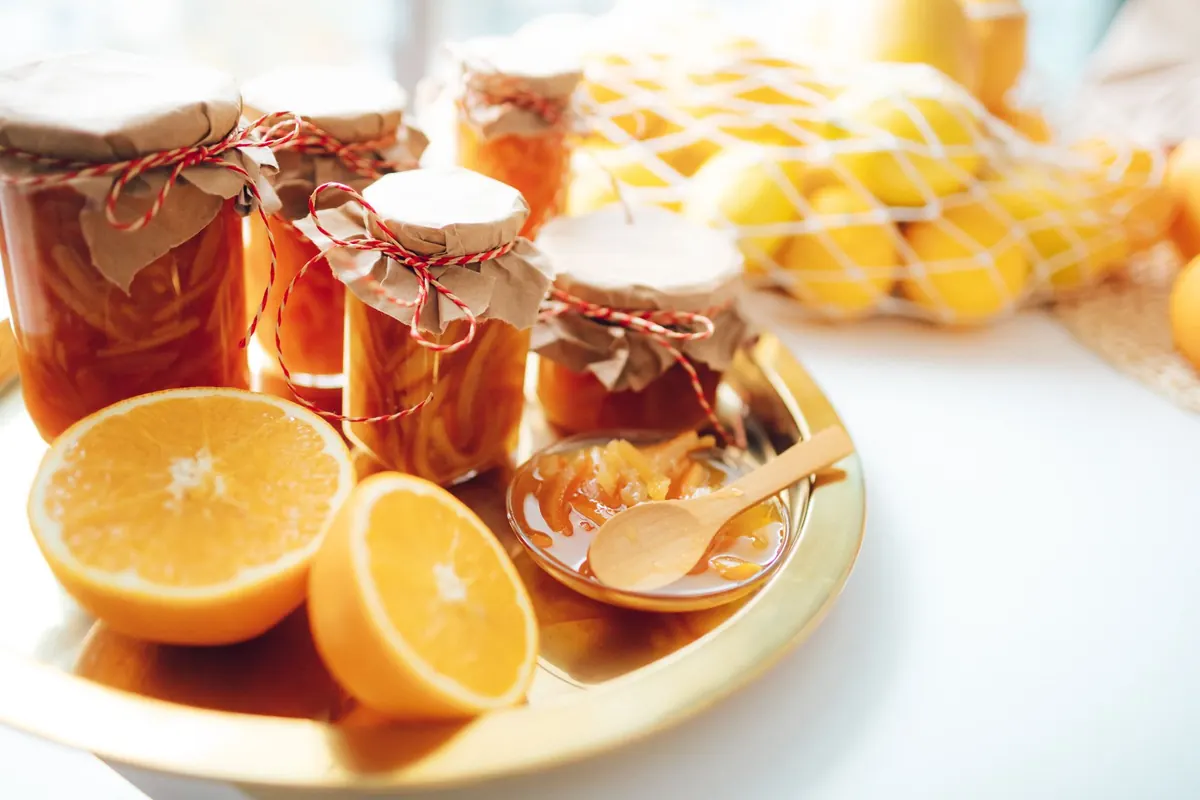
How to Make Seville Orange Marmalade: A Step-by-Step Beginner's Guide
Seville oranges arrive in the shops for a few short weeks each winter, and they are not a fruit you would eat over the sink. They are bitter, seedy and thin-skinned, and that bitterness is the whole reason to buy them. Cooked down with sugar it turns into something sharp and grown-up: marmalade with a real edge, the kind that makes a plain slice of toast worth getting up for. If you have never made preserves before, this is a forgiving place to start, because Seville oranges carry so much pectin that the set almost takes care of itself. The method is mostly patience — cut, soak, boil, test, pot — and this guide follows that order.
Choosing Your Oranges
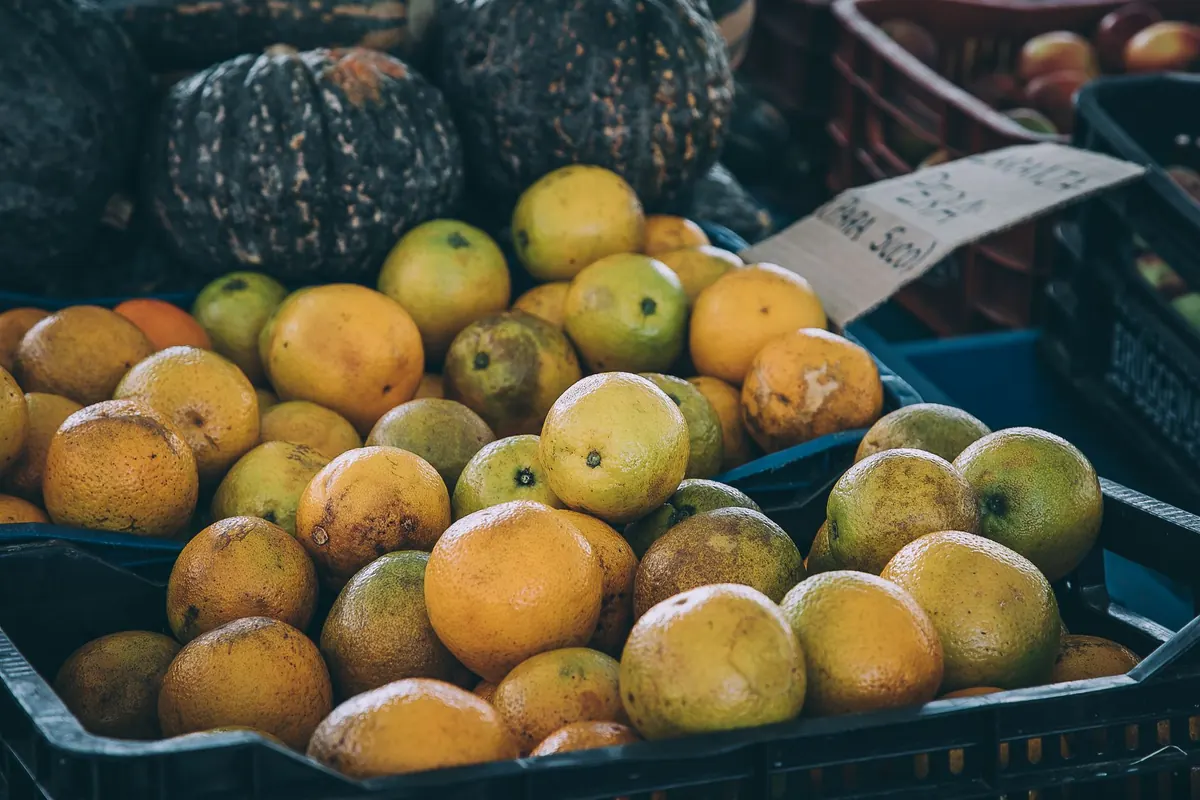
Season runs from roughly late December into February, depending on the crop and where you shop. Outside those weeks you will sometimes find them frozen or tinned, and both work, though fresh fruit gives a cleaner flavour and better texture.
- Heavy for their size. Weight means juice. Pick up two of similar size and buy the heavier one.
- Thin, tight skin. Thick spongy peel means more pith to manage and less fruit inside.
- A little green is fine. Seville oranges ripen unevenly; patches of green say nothing about quality.
- Skip anything soft, bruised or mouldy. One bad fruit can taint a whole batch, and you will not taste it until the jars are open.
Buy a few more than the recipe needs. Fruit varies in juice and pectin from year to year, and having a spare orange or lemon on hand is cheaper than a second trip to the shop.
Your Kit, and the Only Ratio You Need
You need a large heavy-based pan — at least twice the volume of your ingredients, because marmalade climbs the sides as it boils — plus a long wooden spoon, a square of muslin and some string, a wide-mouthed jug or funnel, and clean jars with new lids. A jam thermometer is helpful but not essential; your eyes and a cold saucer will do the job.
The working template is simple: 1 kg Seville oranges, 2 lemons, 2.3 litres water, 2 kg granulated white sugar. That fills roughly five or six 340 g jars. Scale it up or down by weight, and keep the lemons in proportion — their juice adds acidity, which helps the set and brightens the flavour. Don't use preserving sugar with added pectin here. Seville oranges have plenty.
Juice, Pith and Pips
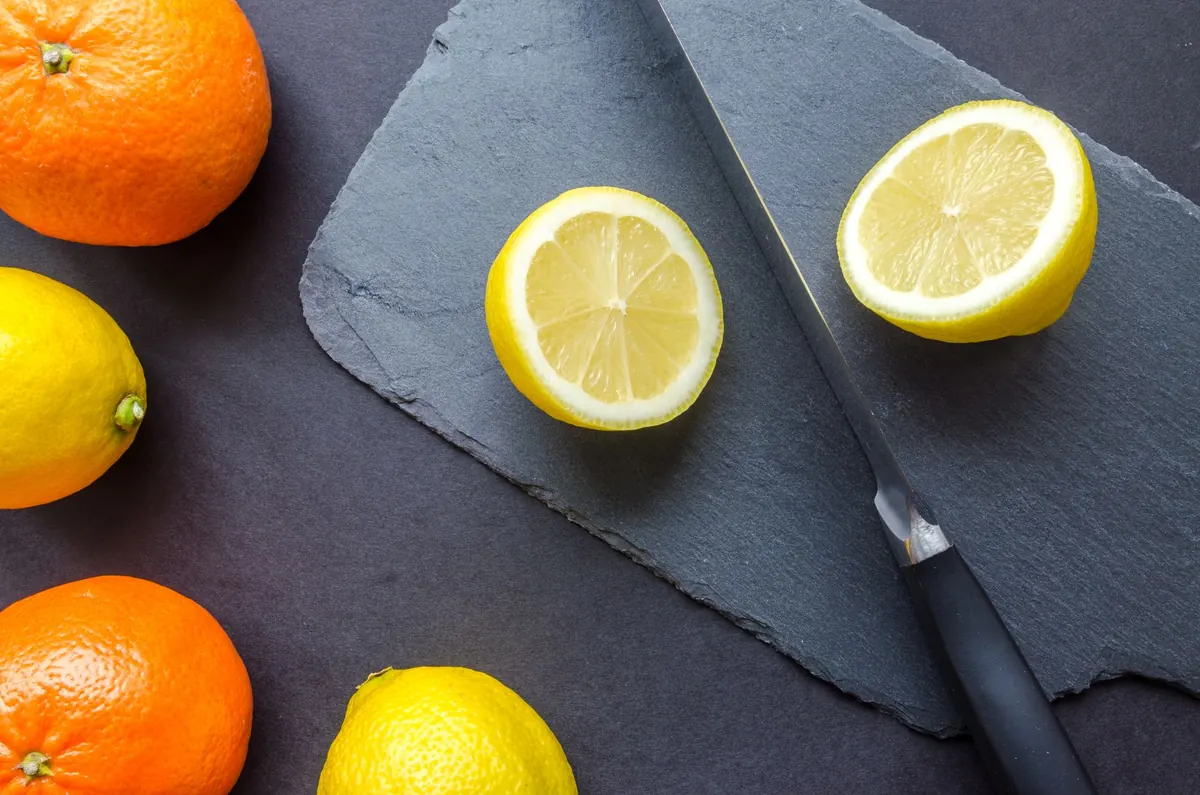
Scrub the fruit under warm water to remove any wax or grit, then halve each orange across the middle and squeeze the juice into your pan. Keep the shells. Tip the juice, pips and loose pulp through a sieve into a bowl and set the juice aside.
Now scrape the pith and the membrane out of each shell with a spoon, and put all of it — pith, membrane, pips — into a square of muslin. Tie it into a bag. This bag is the quiet hero of the recipe: the pips and pith are packed with pectin, and simmering them with the fruit is what turns a thin syrup into marmalade. Drop the bag into the pan with the juice and water.
Then trim and slice the peel. How you cut it is entirely up to you, and it is the one decision that really changes the character of the finished jar.
Three ways to cut the peel
- Thick cut: strips about 5 mm wide. Bold, chewy, old-fashioned. Best on dark toast.
- Shredded: 2–3 mm. The everyday British standard — tender, spoonable, good in baking.
- Fine cut: 1 mm or less, or blitzed briefly. Sets firm and spreads like butter. Good for marmalade you plan to use in glazes.
Stack a few pieces of peel at a time and cut downwards with a sharp knife. It takes longer than you expect, so put the radio on. Uneven pieces are fine; they will even out in the boil.
The Soak and the First Boil
Add the sliced peel to the pan, cover, and leave it overnight, or for at least six hours. This softens the peel so it cooks evenly instead of staying tough in the middle, and it pulls flavour into the liquid.
Next day, bring the pan to a simmer and cook gently, lid on, for about 1½ to 2 hours, until the peel is completely tender and squashes easily between your fingers. Test a piece from the middle of the pile, not the top. When it is soft, lift out the muslin bag and let it cool enough to handle, then squeeze it hard over the pan — that cloudy liquid is liquid pectin. Stir the reserved orange juice and the lemon juice into the pan.
Testing the Set
Now add the sugar and stir over low heat until every grain has dissolved. Only then turn the heat up and bring it to a rolling boil. From here you are watching for the setting point, which usually arrives after 15 to 25 minutes. Put three or four small saucers in the freezer before you start.
- The wrinkle test. Drop a teaspoon of marmalade on a frozen saucer, cool it for a minute, then push it with your finger. If the surface wrinkles and the blob holds its shape, it is ready. If it slides, boil for another five minutes and test again.
- The flake test. Lift a spoonful and let it fall back into the pan. At setting point the last drops join into a sheet or flake rather than falling in separate drips.
- The thermometer. A jam thermometer should read about 104–105°C at sea level. At higher altitudes water boils below 100°C, so trust the wrinkle test instead of the number.
Take the pan off the heat while you test, and skim off any grey foam with a slotted spoon. A knob of butter stirred in at the end also settles the foam.
Potting and Storing
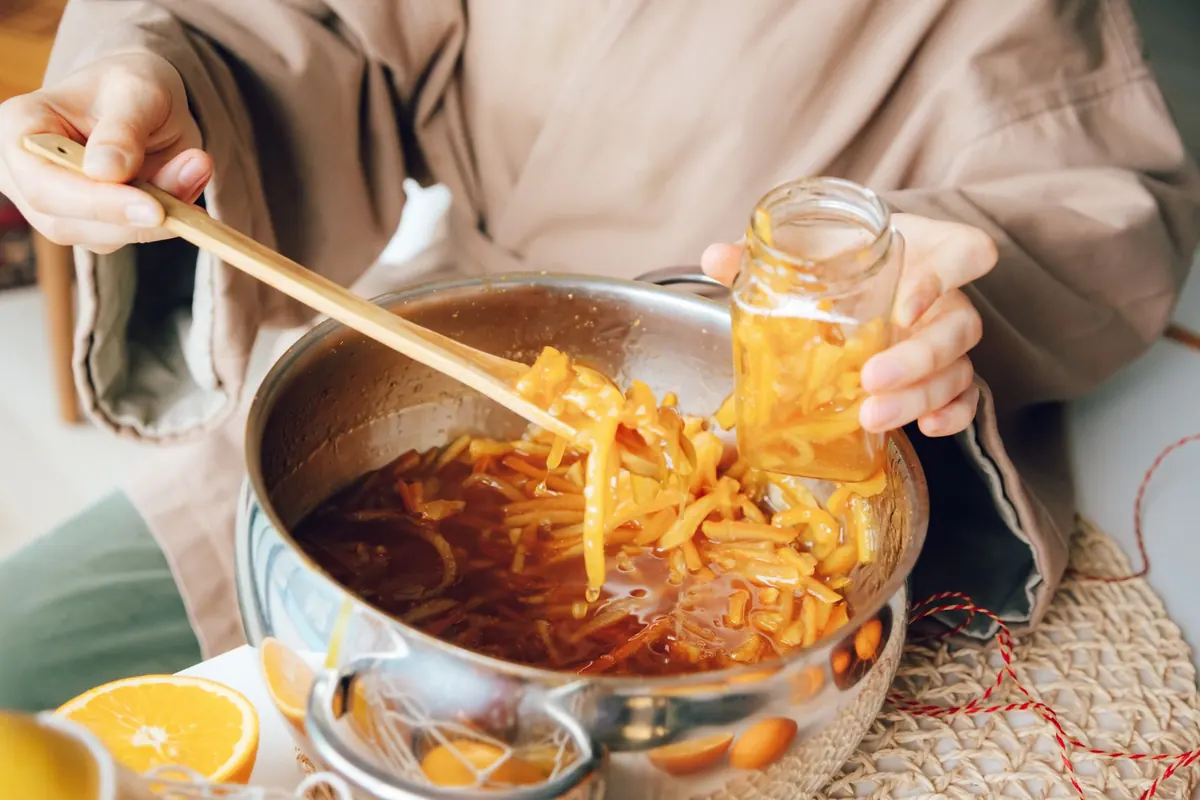
Wash your jars in hot soapy water, rinse, and dry them in an oven at about 140°C for 15 minutes, or run them through the hottest dishwasher cycle and leave them there until needed. Ladle the marmalade in while both jar and preserve are hot, filling to within 5 mm of the rim. Wipe the threads clean — any sticky trace will glue the lid shut — and screw the lids on firmly.
If you plan to eat the marmalade within a few months and keep it somewhere cool and dark, hot filling and sealing is enough. If you want jars that will sit in a cupboard for a year, process them in a boiling water bath for 10 minutes, then leave them undisturbed for 24 hours. Label with the date. Once opened, keep the jar in the fridge.
If Something Goes Wrong
Too runny. Tip everything back into the pan, add the juice of half a lemon, and boil hard for another ten minutes. Re-test. You can do this twice without harming the flavour.
Too stiff. Stiff marmalade is not a disaster — warm it gently with a spoonful of water when you open the jar, or use it melted as a glaze for ham or roast duck.
Too bitter. Usually too much pith in the muslin bag, or an overlong boil. A squeeze of lemon and a week in the cupboard will mellow it. Serve it with something rich, like buttered sourdough or sharp cheese.
Peel floating at the top. The syrup was not thick enough when you potted it. Next time, let the filled jars stand for ten minutes and stir once with a clean skewer before sealing.
Make it once and you will have opinions about cut, bitterness and set for the rest of your life. Write them on the label — next January you will thank yourself.
Photo: ROMAN ODINTSOV / Pexels