Beginner Marmalade Mistakes: 12 Fixes for Runny, Dark, or Tough Batches
Marmalade is a forgiving preserve with unforgiving details. The fruit is cheap, the method is old, and most failures are small: a jar that never firms, a batch that tastes of burnt sugar, peel that chews like boot leather. None of that is bad luck. It is almost always one of a dozen predictable slips, and every one of them has a fix — either in the pan now or in the next batch.
Here are the twelve mistakes that account for nearly every disappointing jar, grouped by what goes wrong.
Before the Sugar: Peel and Prep Errors
1. Leaving the pith on. That spongy white layer under the skin is bitter and slow to soften. Scrape the inside of each peel with the bowl of a spoon until you have roughly 2–3mm of zest and peel left. It takes three minutes and saves a batch.
2. Cutting the shreds too thick. Chunky strips look handsome in the jar and take the better part of an hour to soften. Aim for shreds about the width of a matchstick — even in size, because uneven shreds mean some turn to mush while others stay woody.
3. Boiling the peel in syrup from the start. Sugar firms up plant cell walls, so peel simmered in syrup stays tough no matter how long you cook it. Simmer the shreds in plain water (or water plus the juice) until a shred squashes easily between your thumb and forefinger. Only then add sugar.
4. Throwing away the pips and membranes. Those are your pectin. Tie them in a square of muslin and boil the bundle with the fruit, then squeeze it against the side of the pan and discard it before the sugar goes in. If your marmalade stubbornly refuses to set, this is often the missing piece.
Runny Marmalade: Undercooking and Its Close Relatives
A runny jar usually means the batch never reached setting point, but three other faults look identical: too much water left in the pan, a batch too large to evaporate properly, and too little acid.
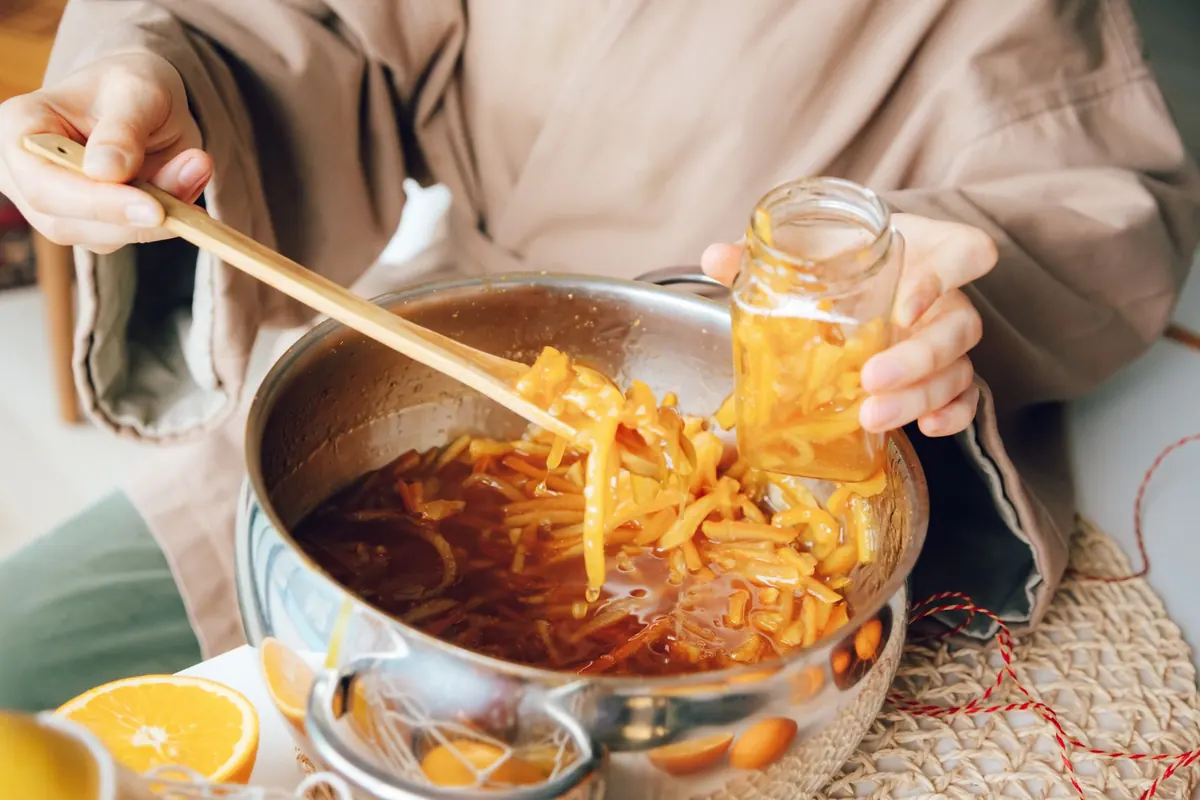
- Use a wide pan. Surface area is what drives evaporation. A tall stockpot of the same volume can add twenty minutes to your cooking time and dull the colour.
- Reduce before you sweeten. Let the peel and liquid cook down by about a third before the sugar goes in. It is much easier to judge the set from a concentrated base.
- Keep batches small. Around 1.5kg of fruit is a comfortable maximum for a home pan. Beyond that, the mixture cools every time you stir and the boil never really gets going.
- Add lemon. Two to three tablespoons of strained lemon juice per kilo of fruit sharpens the flavour and helps the set. Add it with the sugar.
The Set Test You Can Trust
Stop guessing from the back of a spoon. Use this sequence, and repeat it every five minutes once the marmalade has been at a full rolling boil for about fifteen minutes.
- Put two small saucers in the freezer before you start cooking.
- Spoon a little marmalade onto a chilled saucer and leave it for a minute.
- Push it with your fingertip. If the surface wrinkles and holds a skin, it is ready. If it slides around, boil for another five minutes and test again on the second saucer.
- If you prefer a thermometer, setting point sits at roughly 104–105°C. If you live well above sea level, calibrate against the boiling point of water on the day you cook — the gap between the two is what matters.
- Pull the pan off the heat while you test. Marmalade can pass setting point in the time it takes to fetch a saucer.
Dark Batches: Heat, Foam, and Patience
5. Boiling forever at a gentle simmer. Long slow cooking darkens colour and flattens flavour. Once the sugar is in, you want a hard boil and a short one — often 15–25 minutes — not an hour of bubbling.
6. Not skimming. The grey foam that rises is trapped air and fine pulp. Skim it off with a shallow spoon as it appears. Left in, it dulls the finished colour and clouds the jelly.
7. Splashing syrup up the sides. Those streaks caramelise against the hot pan and drip back in. Stir gently rather than vigorously, and wipe the inside walls with a wet pastry brush dipped in water every few minutes.
8. Reusing the discoloured simmering water. The first water used to soften peel turns brown and bitter. Drain it, and start the syrup stage with fresh water or juice.
9. Cooking in the wrong pan. Unlined aluminium reacts with the acid in citrus and turns the batch muddy grey. Stainless steel, enamelled cast iron, or a proper preserving pan all behave.
Tough Peel and Claggy Texture
10. Skipping the soak. Thick-skinned fruit — Seville oranges, grapefruit, some lemons — benefits from an overnight soak in cold water, or two rounds of simmering in fresh water with a drain in between. It softens the peel without turning it to paste.
11. Cramming too much peel into too little liquid. Peel needs room to move. If the shreds are packed solid, the ones at the bottom scorch while the ones on top stay firm.
12. Stirring at the wrong moment. Constant stirring after the sugar goes in breaks down the shreds and makes a cloudy, gluey texture. Stir every few minutes, and more often only once the mixture starts to thicken.
If It's Already in Jars
Runny marmalade is not waste. Tip the jars back into a clean pan, add a splash of water and a tablespoon of lemon juice, bring it to a hard boil and test for set as above. Re-jar into clean, hot jars while everything is still very hot. If you would rather not reboil, use it as a glaze for roast ham or duck, stir it through yoghurt, thin it with vinegar for a salad dressing, or spoon it warm over ice cream.
Jars that were properly processed in a water bath and sealed will keep for a year in a cool cupboard. Anything you are unsure about — a jar that did not pop down, or one you simply filled and capped — belongs in the fridge and should be eaten within a few weeks. For shelf-stable storage, follow the processing times in a tested preserving guide.
Keep a Note on the Jar
Write the fruit, the total weight, the simmering time, the boiling time, and how the batch turned out on a strip of masking tape. Three batches from now you will know exactly how your pan and your stove behave, and marmalade stops being a gamble. The first good jar is worth all the runny ones.
Photo: ROMAN ODINTSOV / Pexels